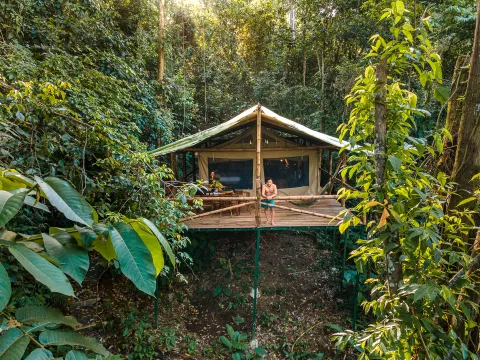
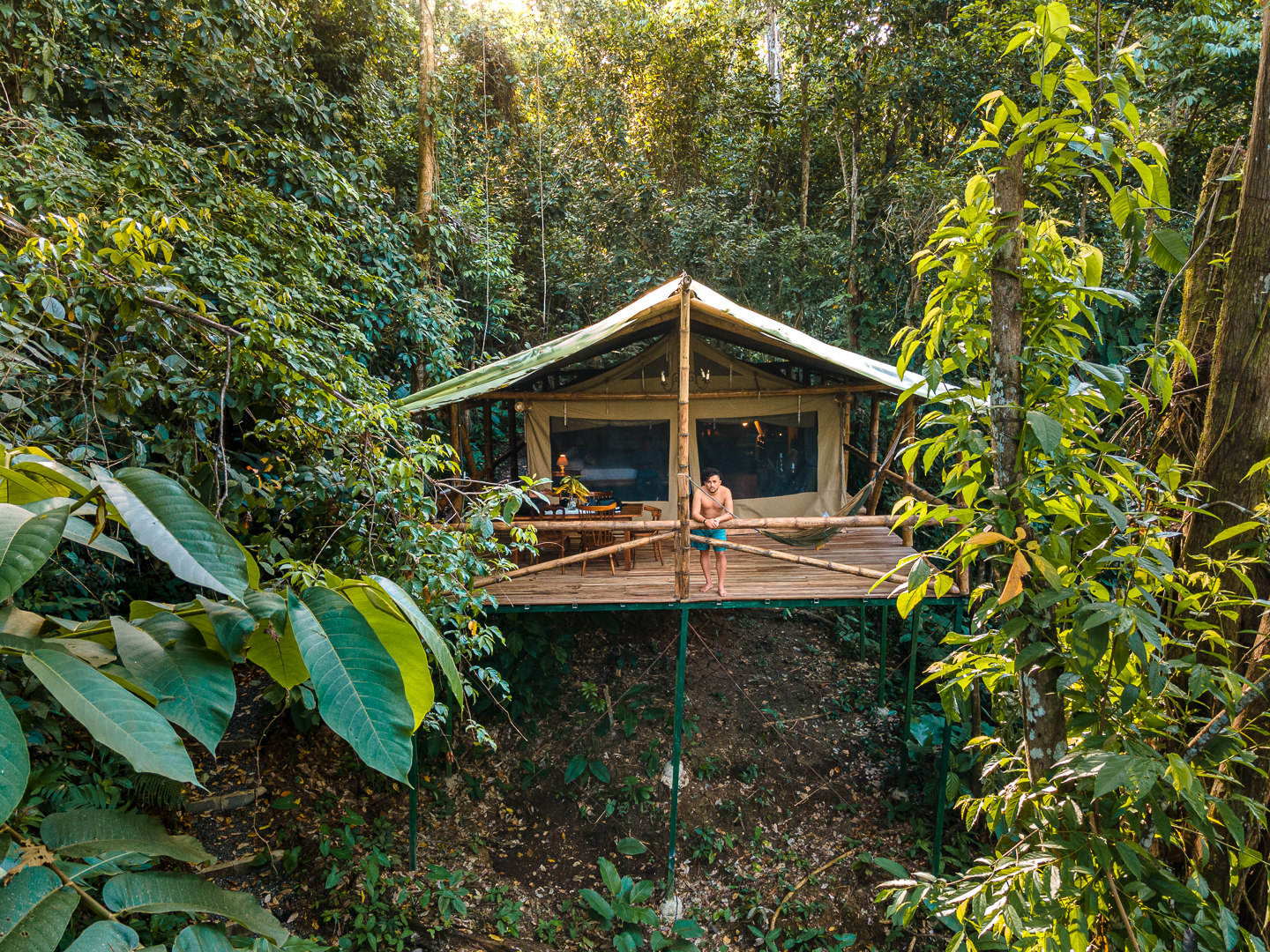
Planning where to stay in Puerto Viejo, Costa Rica? Learn how each beach area, hotel style, and atmosphere differs so you can choose the right Puerto Viejo hotel for your trip.
Is Puerto Viejo in Costa Rica the right place for your stay?
Dense jungle leans right over the asphalt as you roll into Puerto Viejo de Talamanca. The Caribbean humidity hits first, then the sound of reggae from a bar near the crossroads of Route 256 and the road to Playa Negra. This is not a manicured resort town; it is a coastal village where forest, sea, and Afro-Caribbean culture share the same narrow strip of land, and where choosing the right hotel in Puerto Viejo, Costa Rica shapes your entire stay.
For travelers comparing a hotel in Puerto Viejo, Costa Rica with the Pacific coast, the trade-off is clear. You swap long, dry-season sunsets for a wilder, greener setting and a slower, more bohemian rhythm. Nights are rarely silent in the center – music, waves, and the occasional howler monkey form the soundtrack – but step a few minutes away and you find quieter pockets where guests fall asleep to rain on the canopy and distant surf instead of bar music.
The area stretches along several beaches rather than one continuous strip. Puerto Viejo itself is the hub, with Playa Negra to the north and Playa Cocles, Playa Chiquita, and Punta Uva to the south. Choosing the right hotel location along this curve of coast matters more than in many Costa Rica destinations, because each section offers a distinct atmosphere, level of privacy, and access to services, as well as different walking distances to town and to the nearest stretch of sand.
How the coastline shapes your hotel choice
Black volcanic sand defines Playa Negra, just north of town. A hotel located here suits travelers who want a quieter base within a 15 to 20 minute walk of the village restaurants and bars, often along a road where you still hear the surf. The beach is broad and usually less crowded, with a more local feel at sunset when families gather near the lifeguard stand, and many small guesthouses sit a short stroll – often 200 to 500 metres – from the water.
South of the crossroads, Playa Cocles changes the mood. Stronger waves attract surfers, and the palm-lined sand becomes livelier during the day. A place set back from the main road here can balance access and calm: close enough for a short minute walk to the beach, but with enough garden or jungle buffer to soften the traffic and night noise. Typical mid-range hotels in this zone might charge from around US$90 to US$180 per night in high season, with simpler cabinas costing less.
Farther along Route 256, the stretch around Playa Chiquita and Punta Uva feels almost rural. Hotels Puerto Viejo travelers choose in this zone tend to be more secluded, with private paths to the sand and thicker forest between neighbors. You gain birdsong, space, and often a more intimate swimming pool area, but you lose the ability to stroll into town after dinner; a bicycle or car becomes almost essential, and the ride back to the village can take 10 to 20 minutes depending on where you stay.
Atmosphere: from village energy to deep jungle calm
Street life concentrates around the junction where the main road meets the seafront in Puerto Viejo. Here, reggae bars, simple sodas, and small shops cluster together, and a hotel located in the very center will plug you straight into that energy. Expect music until late, people-watching from your terrace, and easy access to everything on foot, but not a particularly early or quiet night, especially on weekends and during peak holiday periods.
Move a few hundred metres toward Playa Negra or toward Cocles and the tone softens. You still feel connected to the village – a short walk or quick bike ride – yet the soundscape shifts to cicadas and distant waves. This middle ring works well for guests who want a good place to sleep without sacrificing spontaneity: you can decide at the last minute to go out for a drink, but you are not staying above the bar, and you are more likely to hear rain on leaves than bass from a speaker.
Beyond Playa Cocles, especially near the more forested sections of viejo Talamanca toward Punta Uva, the experience becomes almost retreat-like. Properties are often tucked behind dense foliage, with private bungalows or rooms scattered through gardens. Here, you trade immediate access to nightlife for early mornings with toucans, long swims, and evenings that end on your own terrace rather than in town, which suits travelers who prefer nature sounds to street noise.
What to expect from hotels, pools, and shared spaces
Architecture in Puerto Viejo leans toward wood, open-air verandas, and high ceilings to manage the Caribbean heat. Many hotels favour separate units or small clusters of rooms rather than a single large block, which gives guests a sense of privacy even in mid-size properties. You will often find hammocks on porches, ceiling fans, and mosquito nets as standard details rather than decorative touches, and air conditioning is more common in newer or higher-end rooms than in older cabinas.
Swimming pools vary widely. Some hotels offer compact plunge pools framed by tropical plants, more for cooling off after the beach than for doing laps. Others build larger pools with shallow ledges and shaded corners, turning them into genuine social hubs where a guest might spend an entire afternoon between swims and reading sessions. If a pool is important to you, check whether it is central and lively or tucked away and quiet, because that single feature can define the feel of the place and how easy it is to supervise children.
Shared areas tend to be open to the air: covered decks, garden lounges, and simple bars where guests drift in after a day at the beach. A family hotel will often design these spaces with flexible seating and easy supervision of children near the water, while more adult-focused properties may favour smaller, more intimate corners. When you compare options, look closely at photos of these common zones; they reveal more about the hotel’s personality than any list of amenities or good reviews, and they hint at whether the atmosphere is social, laid-back, or very quiet.
Room types, privacy, and who each option suits
Rooms in Puerto Viejo range from compact doubles in the village to spacious, stand-alone units surrounded by greenery. Travelers who value privacy often gravitate toward properties where rooms are separated by gardens rather than corridors, with individual entrances and outdoor seating. This layout suits couples, solo travelers seeking quiet, and anyone planning to work or read from their terrace during the day, especially during the slightly cooler early mornings and evenings.
Families usually do better in hotels that offer a mix of interconnected rooms or small houses with two sleeping areas. These allow parents to put children to bed while still enjoying the evening in a living area or on a porch. Look for clear descriptions of how many people each unit accommodates comfortably, not just the maximum number of beds that can be squeezed into the space, and check whether there is a kitchenette or fridge if you plan to prepare simple breakfasts or snacks.
At the other end of the spectrum, a beachfront hostel or simple guesthouse near the center will appeal to younger travelers who prioritise social life over seclusion. These places often have dorms or very simple private rooms, shared kitchens, and communal lounges where guests meet easily. They are rarely the quietest option, but they can be an excellent base if your main goal is to surf, explore, and spend most of your time outside the room, and if you are comfortable with basic facilities and some late-night noise.
Practicalities: getting around, noise, and comfort
Distances in Puerto Viejo look short on a map, but the tropical climate changes how they feel. A hotel located 2 km south of town might be a pleasant bicycle ride along Route 256 in the early morning, yet feel long and humid on foot at midday. If you plan to go out for dinner in the village most nights, staying within a 10 to 15 minute walk of the center makes a real difference, and many visitors rent bikes locally for the flexibility to move between beaches.
Noise is another key factor. Properties directly on the main road or in the heart of the village will hear traffic, music, and late-night voices, especially on weekends. Places set back from the road, behind a garden or a line of trees, tend to be noticeably quieter even when they are only a few hundred metres away. When you compare options, pay attention to how far the rooms are from the street and from any bar or restaurant on site, and read recent guest comments about sound levels if you are a light sleeper.
Climate comfort is more about design than about technology here. High ceilings, cross-ventilation, shaded terraces, and thoughtful landscaping can keep a room surprisingly cool. A good night’s sleep in this part of Costa Rica often depends less on gadgets and more on how well the building works with the Caribbean air, so look for clear photos of windows, shutters, and the way the room opens to the outside, and note whether the property offers fans, air conditioning, or both.
How to choose: matching hotel Puerto Viejo Costa Rica options to your style
Start with your priorities rather than with a long list of amenities. If you dream of walking straight from your room to the sand at sunrise, focus on properties directly on the beach between Playa Cocles and Punta Uva, where the forest often meets the sea. If you prefer to explore cafés, bars, and small shops on foot, concentrate on hotels located in or just north and south of the village itself, where you can step out of your room and be in the centre of Puerto Viejo within minutes.
Think about your ideal evening. Travelers who want a calm, early night should avoid the noisiest central streets and look instead for places with gardens, limited on-site nightlife, and rooms set back from the road. Those who plan to be out late can accept more ambient sound in exchange for being only a short walk from the action, and may prefer a simple but well-located hotel over a more luxurious option that requires a taxi ride back after dinner.
Finally, consider who you are traveling with. Couples and solo guests often value privacy, greenery, and perhaps a small pool more than anything else. Families may prioritise flexible room layouts and easy beach access. Younger travelers or digital nomads might choose a more social environment, closer to the center, where shared spaces make it easy to meet other guests and where the atmosphere stays lively well into the night, especially in the drier, busier months from roughly February to April and again in September and October.
Is Puerto Viejo a good base for exploring Costa Rica’s Caribbean coast?
Puerto Viejo works very well as a base for the southern Caribbean, because it sits between Playa Negra to the north and the beaches of Cocles, Playa Chiquita, and Punta Uva to the south. From here, you can reach Cahuita National Park by road in under an hour, explore different beaches each day, and still return to a single hotel for the night. The village offers enough services, restaurants, and transport options to support a multi-day stay without feeling cut off, while the surrounding coastline provides the quieter settings many guests seek.
What type of traveler is best suited to staying in Puerto Viejo?
Puerto Viejo suits travelers who value atmosphere and nature over formality. It is ideal for people who enjoy a relaxed, Caribbean rhythm, are comfortable with some humidity and wildlife around their hotel, and want easy access to multiple beaches. Couples, surfers, and independent travelers tend to thrive here, as do families who appreciate informal, outdoor-focused days. Those seeking a highly structured resort environment with extensive on-site entertainment may be happier in other parts of Costa Rica.
How many nights should I plan in Puerto Viejo?
A stay of three to five nights usually allows enough time to experience the main beaches, spend a day in Cahuita National Park, and enjoy at least one completely unstructured day by the pool or on the sand. Shorter visits can feel rushed, because travel to the Caribbean coast from San José takes several hours by road. If you are combining Puerto Viejo with other regions of Costa Rica, consider making it the slower, more relaxed segment of your itinerary rather than a quick stop.
Is it better to stay near the center or farther along the coast?
Staying near the center of Puerto Viejo is better if you want to walk to restaurants, bars, and shops, and if you enjoy some evening energy. Choosing a hotel farther along the coast, toward Playa Cocles, Playa Chiquita, or Punta Uva, is better if you prioritise quiet, greenery, and direct beach access. In practice, many travelers split the difference by staying within a short cycling distance of the village, gaining both relative calm and easy access when they want it.
What should I check before booking a hotel in Puerto Viejo?
Before booking, check the exact location on the coast, the distance to the nearest beach, and how you will move between the hotel and the village (on foot, by bicycle, or by car). Look closely at photos of rooms and shared spaces to understand the level of privacy, the presence and style of any pool, and the general atmosphere. Finally, consider how much ambient noise you are comfortable with at night, and choose a setting – central, edge of town, or more remote – that matches your tolerance and your travel style.