Costa Rica is small on the map and slow on the road. A transfer that looks like an hour on a screen often takes three, because mountain highways, river crossings and unpaved coastal tracks set the pace. That single fact decides most of a trip: how many regions you can pair, where to land, and which nights are worth moving for. Our 2026 guide is built around it.
What is inside
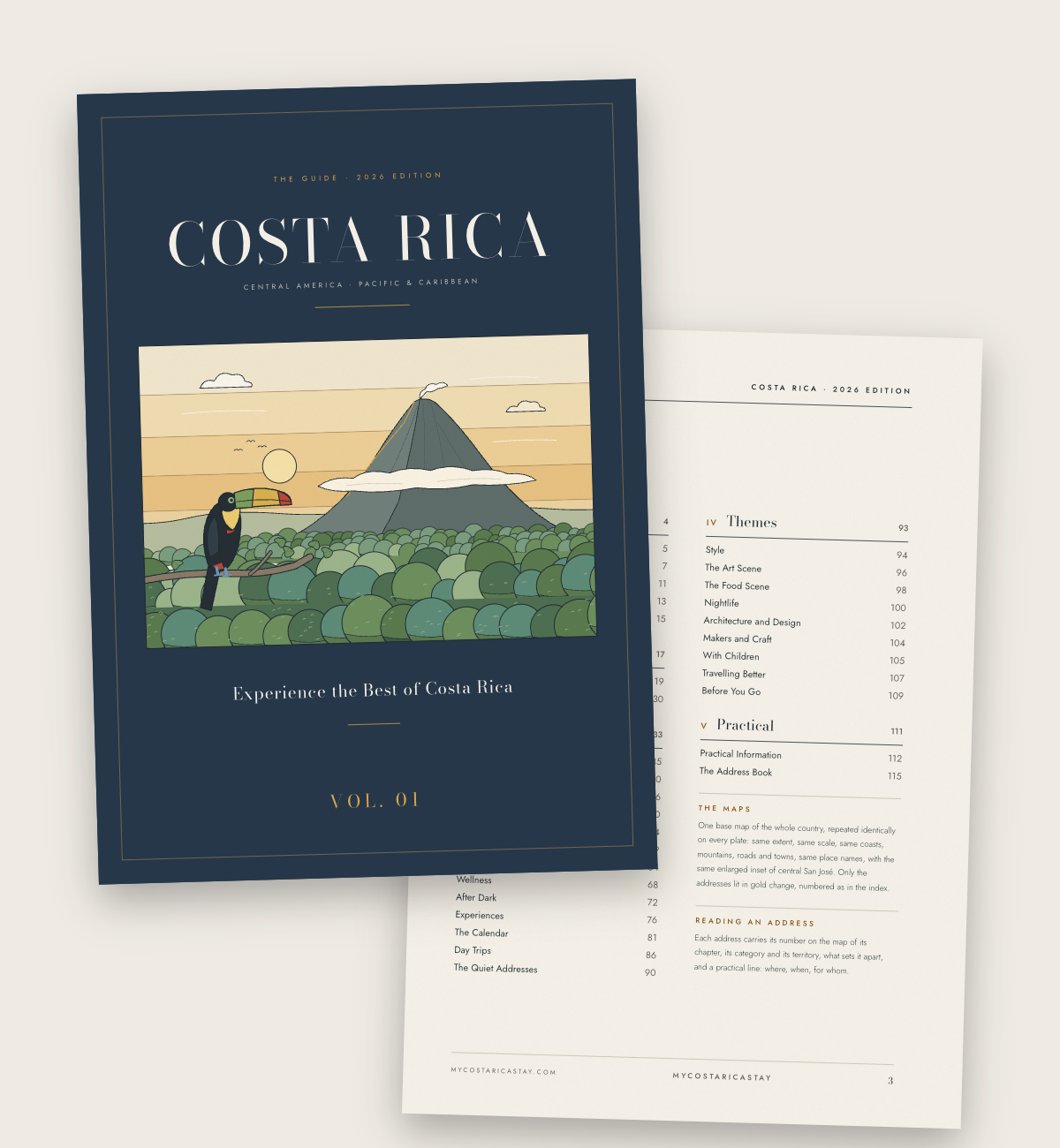
118 plates. 103 numbered addresses, 22 maps, 30 illustrations and three itineraries, from four nights around San José to thirteen nights that end on the Osa Peninsula. It opens in the browser, with nothing to install, and it is free.
The address book is the core of it, in thirteen chapters:
Where to Stay, 10 addresses
Where to Eat, 12 addresses
Where to Drink, 8 addresses
Coffee and Early Hours, 6 addresses
Shopping, 10 addresses
Culture and Heritage, 10 addresses
Outdoors, 8 addresses
Wellness, 5 addresses
After Dark, 6 addresses
Experiences, 9 addresses
The Calendar, 8 dates
Day Trips, 6 destinations
The Quiet Addresses, 5 addresses
Around them sit the opening chapters (the spirit of the place, ten facts, when to go, getting there and around, local codes), nine themes from the food scene to travelling with children, and the practical pages with the full address book, sorted by region.
Eight regions, from Papagayo to the Osa Peninsula
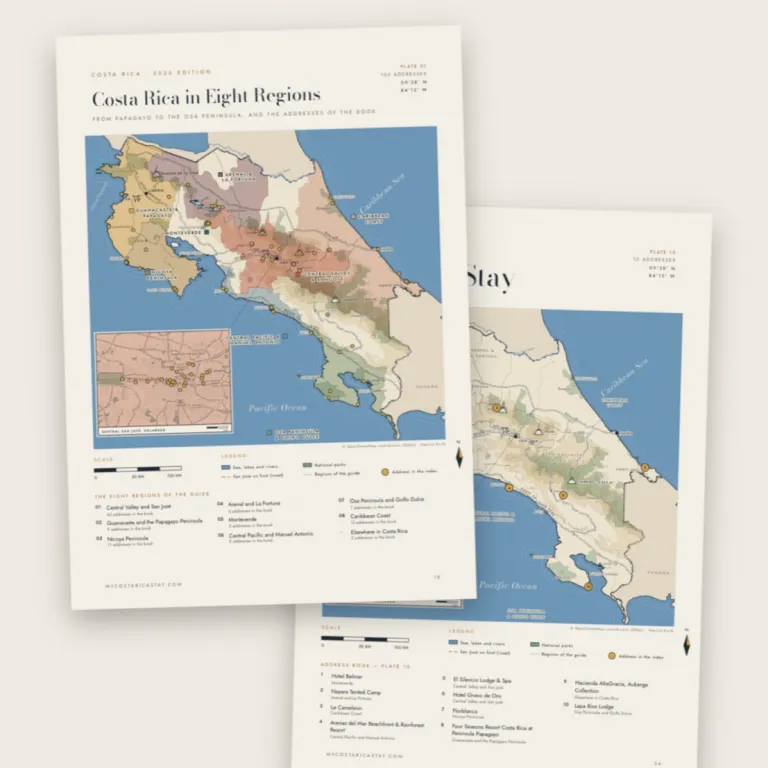
The guide reads the country less by province than by gateway. Liberia (LIR) in the northwest serves Guanacaste and the north of the Nicoya Peninsula; San José (SJO) serves the rest. From there it draws eight regions: the Central Valley and San José, Guanacaste and the Papagayo Peninsula, the Nicoya Peninsula, Arenal and La Fortuna, Monteverde, the Central Pacific and Manuel Antonio, the Osa Peninsula and Golfo Dulce, and the Caribbean Coast.
The addresses are spread the way they really are. The Central Valley and San José hold 43 of them, with the capital's museums, markets and tables. The Caribbean Coast has 12, the Nicoya Peninsula 11, Guanacaste 9, the Central Pacific 8, the Osa Peninsula 7, Arenal 6 and Monteverde 5. The guide also says which region deserves a stay and which one is worth a single night: the Central Valley, in its words, is the hub, worth a night rather than a stay.
22 maps on a single base
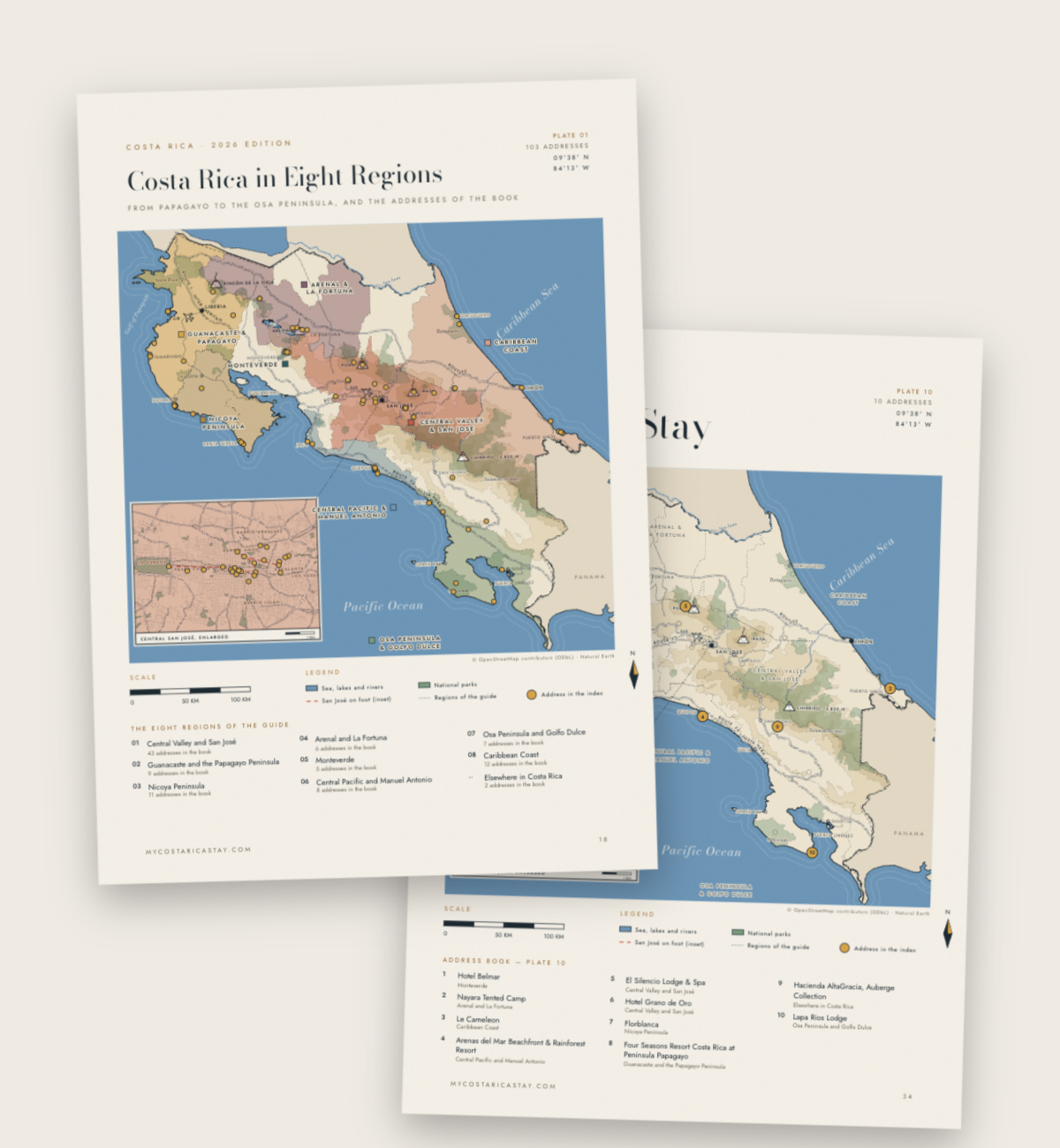
Every map in the guide uses the same drawing of the country: same extent, same scale, same coasts, mountains, roads and towns, with the same enlarged inset of central San José. Only the addresses lit in gold change from one plate to the next, numbered as in the index. Turn from Where to Stay to Day Trips and you see at once which outings sit within reach of the Arenal lodges and which ones need a base of their own.
Every address says why it is there
Each entry carries its number, its category, its region, what sets it apart, why it made the book, and a practical line: where, when, for whom.
Rufino, in La Fortuna, is in because Arenal lodges sit outside town and this is the table that justifies the drive in for dinner, with the same chef as Silvestre, one of the capital's reference restaurants. Pacuare Lodge, on the Caribbean slope, is in because the usual way in is not a road but the river itself: guests arrive by raft, and the guide gives the minimum ages for each run. Río Celeste comes with the detail that matters on the day: the 2 pm last entry is enforced to the minute.
Three itineraries built only from the book
The three routes use nothing but the addresses in the guide, with drive times taken from the transport sections and from transfer operators.
Four nights, San José and the Central Valley. One base, Hotel Grano de Oro, and the capital treated as a destination: the Teatro Nacional, the Museo del Oro, Poás and Irazú on booked slots, the oxcart workshops of Sarchí.
Nine nights, Papagayo, Arenal and Monteverde. The frame the guide recommends for a first trip: in through Liberia, out through San José, so that no leg is driven twice.
Thirteen nights, from the capital to the Osa Peninsula. Four bases plus San José, with domestic flights at both ends and no stop shorter than two nights.
They also carry the weekly closures that catch travelers out: Manuel Antonio National Park shuts on Tuesdays, Rincón de la Vieja and the Museo Nacional on Mondays.
Drawn, not stocked
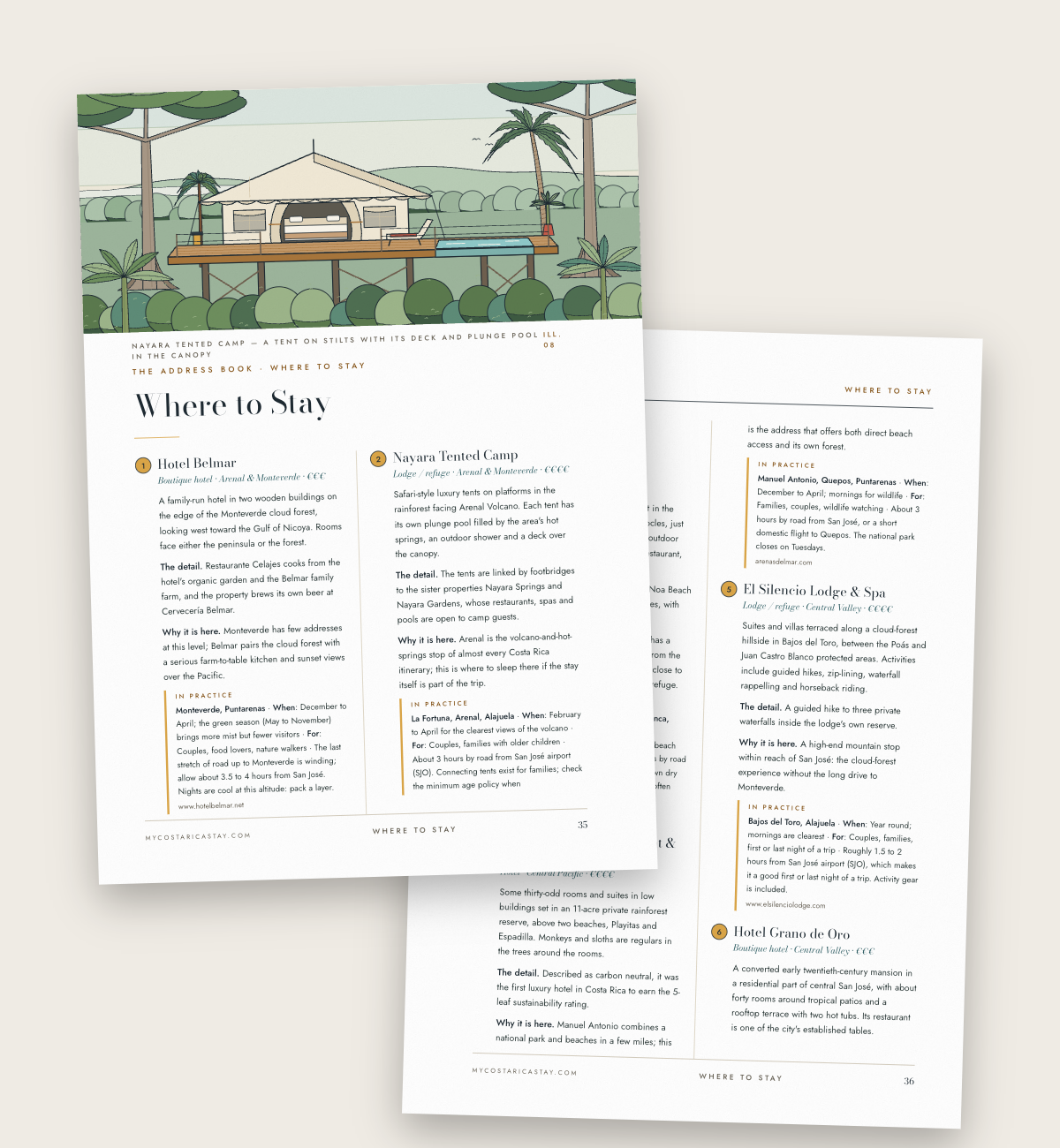
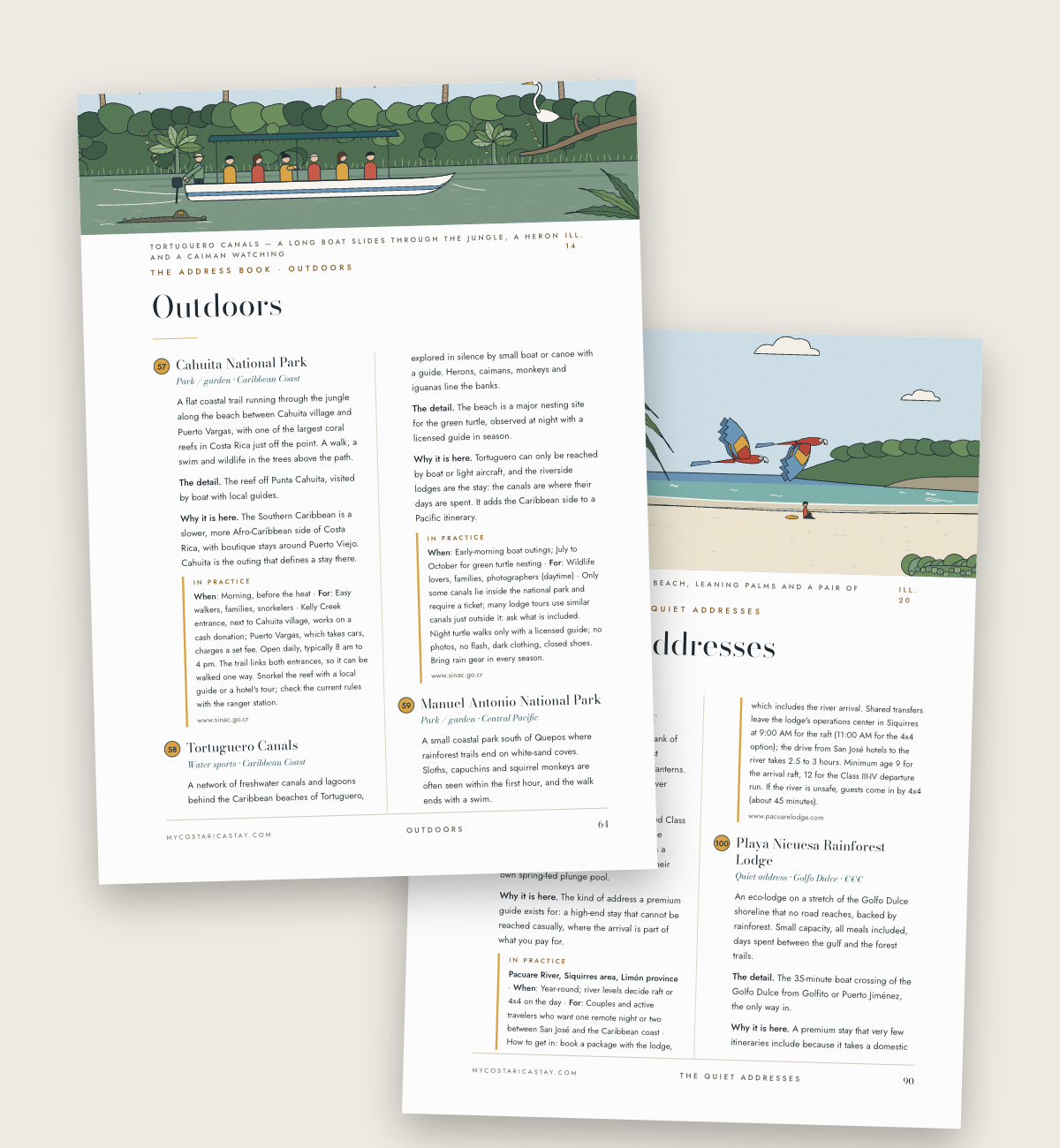
The 30 illustrations are drawn for the guide: a long boat in the Tortuguero canals, a tent on stilts at Nayara, scarlet macaws over Playa Barrigona. They open the chapters and set the tone of each one.
How to get it
The Costa Rica Guide is free. The page of the guide, just below, gives access to the 2026 edition: 118 plates to read in the browser, region by region, before you book the first night.