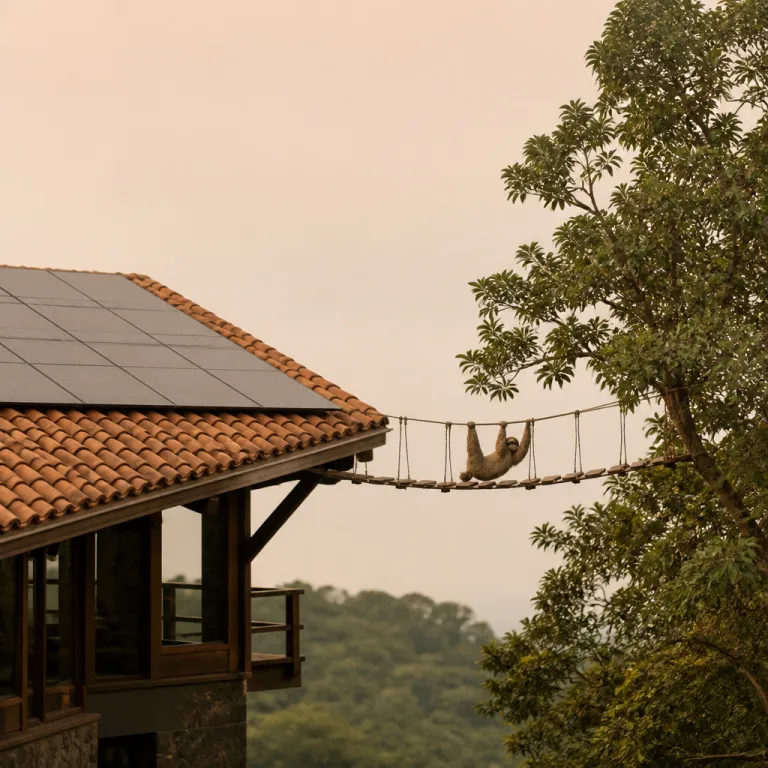
How to read an eco friendly luxury hotel in Costa Rica
Luxury travelers often judge a hotel by its pool, spa and view. In Costa Rica, the real measure of an eco friendly luxury hotel in Costa Rica hides in the back of house, where pipes, tanks and cables quietly rewrite what tourism can be. When you choose a lodge or resort here, you are also choosing a position on conservation, sustainability and the future of Costa Rican nature.
The national electricity grid in Costa Rica already runs largely on renewable energy in a typical year, according to public summaries from the Costa Rican Electricity Institute (ICE) since 2015. Exact annual percentages vary, but the trend is consistently above 95 percent. That means a luxury hotel or rainforest lodge that adds solar panels or micro hydro power is not just chasing marketing points, but deepening an already eco focused national commitment. This is where an eco conscious luxury hotel in Costa Rica stands apart from a conventional property that only talks about green values.
Across the country, from the cloud forest above San José to the Osa Peninsula and Drake Bay, serious eco lodges treat infrastructure as their main conservation tool. They design wildlife corridors, build sloth bridges and manage water so that rainforest and hot springs ecosystems stay intact for the long term. When you book hotels or lodges through a curated platform like MyCostaRicaStay, which clearly discloses that it earns commissions from partner properties and presents its hotel picks as editorial recommendations, you are effectively choosing which version of Costa Rica your children will inherit.
Behind these projects stand three constant actors in Costa Rican sustainable tourism. Eco hotel owners act as implementers, installing solar panels and sloth bridges with help from local contractors and environmental NGOs such as Osa Conservation or local partners of the National System of Conservation Areas (SINAC). Local communities collaborate on trail building, wildlife monitoring and the daily work of keeping tourism aligned with nature.
Environmental NGOs then advise on conservation science, from mapping natural wildlife movement to measuring the impact of new sloth bridges. Their guidance helps a luxury resort or eco lodge decide where to place a corridor, how to light a path and when to restrict vehicle access. In a mature eco focused luxury hotel in Costa Rica, every infrastructure decision is filtered through this shared expertise and often documented in internal monitoring reports or joint studies.
Solar, micro hydro and the quiet power grid of the rainforest
Walk the back paths of a serious eco lodge and you will eventually reach a clearing of tilted glass. Those photovoltaic panels are the visible tip of an energy system that lets a remote rainforest lodge operate without a diesel generator humming through the night. In Costa Rica, industry snapshots by the Costa Rican Tourism Board (ICT) and local hotel associations in the early 2020s suggest that a significant share of hotels already use some form of solar energy, and the best eco lodges treat that figure as a baseline, not a finish line.
On the Golfo Dulce, Playa Nicuesa Rainforest Lodge has become a reference point for off grid infrastructure. The lodge runs on solar power, collects rainwater and composts organic waste, proving that a remote eco friendly resort can still deliver hot showers, a refined spa experience and quiet luxury. Families staying there quickly learn that comfort in Costa Rica does not require sacrificing sustainability or the surrounding rainforest.
Solar systems at an eco friendly luxury hotel in Costa Rica usually prioritize essentials first. Refrigeration, water pumps and safety lighting come before air conditioning, hairdryers and decorative illumination in public hotel spaces. When a property also taps a nearby stream for micro hydro power, it can extend that comfort window without increasing its carbon footprint or adding noisy backup generators.
There is a trade off, and you should understand it before you book. Off grid eco lodges on the Osa Peninsula or near Arenal sometimes limit power use during certain hours, especially for high draw appliances in guest rooms. This is not a flaw in the hotel; it is a design choice that keeps the surrounding nature darker, quieter and more welcoming to wildlife.
For families, these constraints can become part of the experience rather than an inconvenience. Children learn why lights are dimmed on forest edges, and how a national park sky looks when a resort chooses stars over floodlights. If you are planning a short wellness focused escape, pair an off grid stay with a more conventional luxury property by using a curated guide to premium accommodations and wellness resets in Costa Rica, such as the dedicated 48 hour wellness reset programs highlighted on MyCostaRicaStay, which are presented as editorial recommendations but linked to partner hotels with commission based relationships.
Sloth bridges, wildlife corridors and the architecture of movement
Look up when you arrive at a Costa Rican eco lodge and you may notice ropes or wooden beams strung between trees. These are sloth bridges, part of a growing network of wildlife crossings that field projects and NGOs reported as numbering in the low hundreds nationwide by the early 2020s. They allow sloths and other arboreal species to move safely above roads, driveways and resort paths that would otherwise fragment their habitat.
Guests often ask, “What are sloth bridges?” and the most accurate answer is simple. “Structures that allow sloths to safely cross roads.” The follow up question, “How do sloth bridges benefit wildlife?” has an equally direct response: “They prevent road fatalities and habitat fragmentation.”
On the Osa Peninsula, several eco lodges maintain private wildlife corridors that link their forest patches to nearby national park boundaries. These corridors may be narrow strips of secondary rainforest, or reforested lines of native trees that guide animals between food sources and nesting sites. In regions like Drake Bay, where tourism pressure is rising, such corridors are the difference between isolated pockets of nature and a living, connected ecosystem.
Properties near Manuel Antonio and Arenal Volcano have also begun to integrate sloth bridges into their design. Some string them above internal access roads, while others work with local communities to place them along public routes used by guests and staff. When you see a photo credit on a hotel website showing a sloth mid crossing, you are looking at infrastructure that required planning, permits and long term monitoring, often in coordination with SINAC or municipal authorities.
Families can turn these features into a living classroom. Ask during check in whether the hotel offers a guided walk focused on wildlife corridors, or consult a conservation minded booking guide such as MyCostaRicaStay’s analysis of green season wildlife density peaks for solo travelers, which also applies to family itineraries and is based on seasonal data from national parks. Children who understand why a rope in the canopy matters will never see a road or a resort driveway the same way again.
Water, waste and the closed loop kitchen of a luxury eco lodge
Energy and wildlife corridors may get the headlines, but water is where an eco friendly luxury hotel in Costa Rica proves its seriousness. Remote lodges far from San José or other urban centers cannot rely on municipal treatment plants, so they build their own systems to handle every liter that flows through the property. The goal is simple: return water to the surrounding nature as clean as, or cleaner than, when it arrived.
In the Golfo Dulce region, one rainforest lodge processes wastewater through a series of natural filtration beds. Gravel, sand and wetland plants strip out contaminants before the water seeps back into the soil, protecting nearby mangroves and marine ecosystems. This kind of infrastructure rarely appears in glossy hotel marketing, yet it is central to Costa Rica’s reputation for sustainable tourism and is encouraged in technical guidance from environmental authorities.
Kitchen waste tells a similar story. Many eco lodges now compost food scraps on site, turning peelings and coffee grounds into rich soil for organic gardens that supply the restaurant. Guests may see the final result in a salad of local greens or herbs, but the composting bins and turning routines sit behind the scenes, tended daily by staff.
Some properties integrate this loop into their guest experience in subtle ways. A cooking class might begin with a walk through the garden, where the chef explains how yesterday’s trimmings will feed tomorrow’s vegetables. Children quickly grasp that what leaves the plate does not simply vanish, and that a luxury resort can still operate as a closed loop system.
When evaluating hotels in Costa Rica, ask specific questions about water and waste. Do they treat greywater separately from blackwater, and how is each reused or released into the environment? Is there a visible composting program that supports on site gardens, or do food scraps leave the property in plastic bags? The most committed eco friendly luxury hotel in Costa Rica will answer these questions with clarity and pride, and may even share basic performance data or third party certifications.
How to tour the hidden infrastructure with your family
Most guests never see the infrastructure that makes a Costa Rican eco lodge truly sustainable. Staff will show you if you ask, though, and the right questions can turn a rainy afternoon into the most memorable hour of your trip. For families, this behind the scenes tour becomes a practical lesson in sustainability rather than an abstract concept.
Start with energy. Ask where the solar panels are located, how much of the hotel’s power they provide and whether there is any micro hydro support during the wet season. Follow up with a visit to the battery room or control panel, where older children can see how sunlight becomes the electricity that powers their room.
Move next to water and waste. Request a short walk to the treatment area, and ask a staff member to explain how greywater from showers differs from blackwater from toilets, and how each is handled. If the property uses constructed wetlands, this is a chance to show children how plants can clean water in a natural, visually appealing way.
In the kitchen, inquire about composting and sourcing. Many Costa Rican hotels now separate organic waste, and some will let families see the compost piles and the gardens they feed. This is where the abstract term “sustainable tourism” becomes a tangible cycle of soil, vegetables and shared meals.
Finally, step back into the forest. Ask a guide to trace the wildlife corridors on a map, point out sloth bridges and explain how the property monitors animal movement over time. When children hear that “Are all eco-hotels in Costa Rica solar-powered?” has a nuanced answer — “Many are, but not all; it depends on the hotel's commitment to sustainability and its location.” — they begin to understand that every eco friendly luxury hotel in Costa Rica makes choices, and that their family’s booking decisions can reward the most responsible ones.
Where infrastructure and indulgence meet: property examples and booking strategy
Costa Rica’s most interesting eco friendly luxury hotel experiences sit at the intersection of infrastructure and indulgence. Near Arenal, several high end resorts pair views of Arenal Volcano with private hot springs, yet the standouts are those that also invest in serious water treatment and reforestation. When you read about a property’s spa, ask yourself what is happening to the mineral rich water after it leaves the pool.
In the Central Valley, Finca Rosa Blanca has long been a reference for coffee farm stays that blend artful design with deep sustainability. The property’s commitment to organic agriculture, shade grown coffee and on site composting makes it a model for how a small luxury hotel can support both local communities and surrounding nature. When you see the name Rosa Blanca in a travel feature, you are usually looking at a case study in long term conservation thinking.
Along the Osa Peninsula and around Drake Bay, eco lodges operate as de facto research stations, with wildlife corridors, sloth bridges and low impact energy systems woven into their daily routines. These properties often work closely with environmental NGOs and local communities to monitor species movement and refine their infrastructure over time. For families, a stay here feels less like a resort holiday and more like a gentle immersion into Costa Rican rainforest life.
San José and other urban hubs offer a different equation. Here, the grid is stable, municipal water treatment exists and the focus shifts to sourcing, waste reduction and support for local suppliers. A city hotel that invests in rooftop solar, rainwater capture and robust recycling may have less visual drama than a rainforest lodge, but its impact on urban sustainability is no less real.
To navigate these choices, use a curated booking platform that evaluates properties on both comfort and conservation infrastructure, such as MyCostaRicaStay’s guide to premium accommodations and luxury stays for discerning travelers. The platform states that it reviews partner hotels using criteria informed by national regulations and conservation best practices, and that it may receive commissions when travelers book. Look for clear explanations of energy systems, water treatment, wildlife corridors and composting programs, not just generic eco language. In a country where tourism and conservation are tightly linked, the eco friendly luxury hotel in Costa Rica that you choose becomes part of the national story.
FAQ
What are sloth bridges and can tourists use them ?
Sloth bridges are overhead structures, often made of ropes or wooden beams, that connect tree canopies so sloths and other arboreal animals can cross roads and clearings safely. They are designed exclusively for wildlife movement and are not intended for tourist use. Can tourists use sloth bridges? No, they are designed specifically for wildlife.
Why do eco hotels in Costa Rica use solar panels ?
Eco focused hotels in Costa Rica use solar panels to reduce reliance on fossil fuels and lower emissions, even though the national grid is already largely renewable. Solar systems give remote lodges energy independence, especially in areas without reliable grid access. They also allow properties to expand services, such as refrigeration and lighting, without increasing their environmental footprint.
Are all eco lodges in Costa Rica completely off grid ?
Not all eco lodges in Costa Rica operate off grid; many connect to the national renewable grid while adding solar or micro hydro systems for resilience. Off grid properties are more common in remote regions like the Osa Peninsula, Drake Bay and parts of the cloud forest. When booking, you can ask whether a lodge is grid tied, hybrid or fully independent, and what that means for power availability.
How can families evaluate the real sustainability of a luxury hotel ?
Families can evaluate sustainability by asking specific questions about energy sources, water treatment, waste management and wildlife corridors. A genuinely eco friendly luxury hotel in Costa Rica will be transparent about its systems and often proud to show them during a short tour. Look for concrete details, such as composting programs, sloth bridge locations and partnerships with local communities or environmental NGOs.
What role do local communities play in eco friendly tourism infrastructure ?
Local communities often help build and maintain trails, monitor wildlife and support conservation projects linked to eco lodges and resorts. Their involvement ensures that tourism revenue circulates locally and that infrastructure decisions respect traditional knowledge and land use. When you choose hotels that collaborate closely with nearby villages, you strengthen both conservation outcomes and community wellbeing.