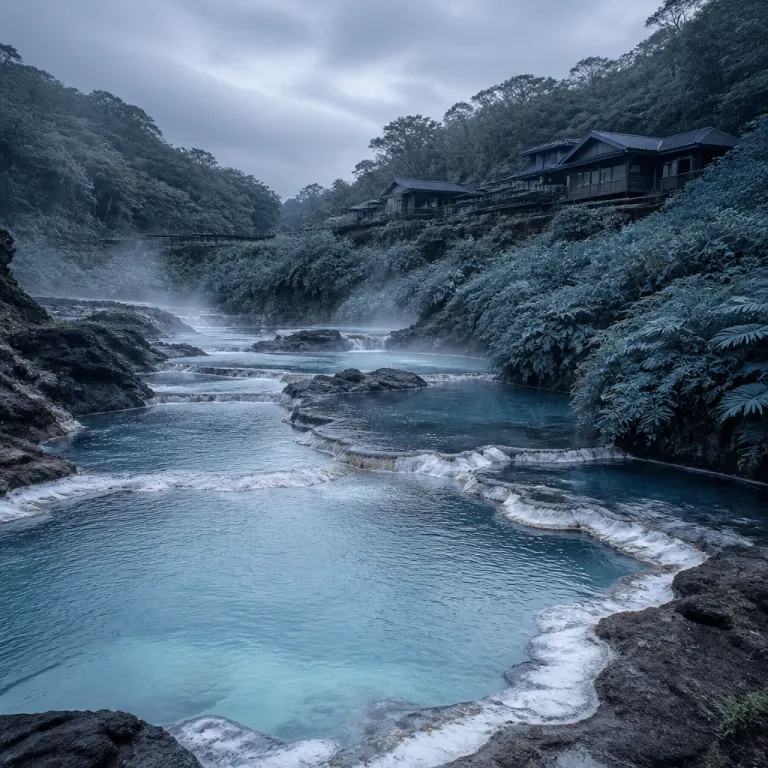
The quiet power of naturally heated water in Costa Rica
Costa Rica is one of the rare places where a luxury spa does not need to heat its water. Along the volcanic corridor from Arenal to Rincón de la Vieja and Tenorio, naturally heated rivers and springs shape a kind of open air resort spa that feels more like geology than design. For a solo traveler, this is where the idea of a costa rica natural hot springs volcanic resort stops being a marketing phrase and becomes a very physical, very quiet experience.
Arenal is the most famous arena for this, with the perfectly conical Arenal volcano feeding a network of hot springs that run beneath the rainforest canopy. Here, the difference between a true springs resort and a regular hotel with warmed pools is simple but decisive ; the water in a genuine hot spring emerges from the ground already hot, mineral rich and moving. When you book a costa rican stay in La Fortuna, the question is not whether there are pools, but whether those pools are part of a living thermal river or just a concrete basin filled from a pipe.
Tabacón Thermal Resort & Spa is the clearest example of this natural flow. The Tabacón hot river runs through dense gardens, creating a sequence of hot pools, cascades and quiet corners that feel discovered rather than built. You move from one naturally heated spring to another, noticing how the temperature shifts by a few degrees as the hot water mixes with cooler tributaries, and this gradient is something no electrically heated resort spa can truly copy.
Other properties in La Fortuna interpret the same arenal hot source differently. Ecotermales hot springs hotel keeps its thermal pools smaller and more intimate, limiting day pass numbers so the experience remains contemplative, especially for solo guests. Los Lagos, by contrast, spreads its hot springs across a larger property with water slides and family friendly pools, which suits travelers who want to enjoy both the view of Arenal volcano and a more social atmosphere.
Across these places, the phrase pura vida is not a slogan but a way of pacing your day. You might start with a pre breakfast soak in a quiet hot spring, watching steam rise as the forest wakes. Later, you can walk the trails around the volcano, then return to your springs resort for a final, almost meditative float beneath the stars.
How volcanic sources shape the soaking experience
Not all hot springs in Costa Rica feel the same, because not all volcanoes feed the same kind of water. Around Arenal, the springs carry a distinct mineral profile that often leaves skin feeling soft and muscles noticeably looser after a long day of hiking. Move north to Rincón de la Vieja or west toward Tenorio, and you encounter different combinations of sulfur, iron and other minerals that change both the color and the sensation of each hot spring.
In La Fortuna, many travelers compare Tabacón with Baldi hot springs and Paradise hot springs, three very different interpretations of the same arenal springs source. Baldi hot springs leans into a resort style layout, with numerous pools at varying temperatures, a more animated bar scene and a design that suits guests who want to enjoy music and conversation while they soak. Paradise hot springs sits somewhere between, with lush planting, smaller pools and a more intimate scale that works well for solo travelers who still enjoy a bit of low key sociability.
Then there is Titoku hot springs, a compact property where the focus is on a handful of carefully terraced pools that step down a hillside. Each pool at Titoku hot springs offers a slightly different view of the surrounding forest and, on clear nights, the silhouette of Arenal volcano. Because the water is naturally heated, the temperature gradient from the upper to the lower pools feels organic, and you can move until you find the exact degree of hot that suits your body.
Some travelers prefer to stay at a springs hotel on site, while others base themselves in a separate luxury hotel and purchase a day pass to their preferred thermal complex. A day pass to Tabacón, Ecotermales or Baldi hot springs can be a smart choice if you want to sample several styles of resort spa during a single costa rica trip. When you plan, check whether your chosen property offers evening access, because soaking after dark under a clear sky can be the most memorable part of your stay.
If private soaking is a priority, consider pairing your thermal stay with a property that offers suites with plunge pools. Many high end resorts across Costa Rica now feature private pools fed by either thermal or regular water, and you can explore some of the best options in this guide to Costa Rica resorts with private pools for an elegant private escape. Combining a costa rica natural hot springs volcanic resort with a villa style room that has its own pool gives you both the social energy of shared springs and the solitude of your own water.
Reading the fine print: what “thermal” really means
Luxury travelers are used to spa language, and Costa Rica is no exception. Terms like thermal, natural, volcanic and hot springs appear across marketing materials, but they do not always mean the same thing. If you want the full sensory impact of a costa rica natural hot springs volcanic resort, you need to read beyond the adjectives and understand how the water actually reaches the pool.
At one end of the spectrum, you have properties like Tabacón, where a genuine thermal river flows through the grounds and every pool is fed directly from this hot spring source. In the middle, some hotels tap into geothermal wells, then pipe the naturally heated water into constructed pools, which still counts as a true hot spring experience, though the layout may feel more like a conventional resort spa. At the other end, a few properties use regular water that is electrically heated, then branded with volcanic imagery, which can be pleasant but is not the same as bathing in a living spring.
When you evaluate a springs resort, ask three specific questions. First, is the water naturally heated by volcanic activity, or is it warmed mechanically ? Second, does the property allow the hot spring to flow, creating a sense of movement and temperature variation, or is the water static in tiled pools ? Third, how close is the hotel to the actual arenal volcano or other volcanic source, and does that proximity shape the landscape you see from the water.
Solo travelers often appreciate properties that limit day pass numbers, because this keeps the thermal circuit calm even at peak times. Ecotermales hot springs hotel in La Fortuna is a good example, with timed entries that preserve a quiet, almost retreat like atmosphere around its pools. Families, on the other hand, might prefer a larger property like Los Lagos, where the mix of hot springs, slides and cooler pools suits different energy levels throughout the day, and where a spacious room layout makes it easier to manage gear after excursions.
If you are designing a longer itinerary that combines thermal regions with the coast or cloud forest, it is worth studying a specialist guide to designing an unforgettable family trip to Costa Rica in luxury and comfort. Even as a solo explorer, you can adapt these planning principles to balance active days around the volcano with slower days at a springs resort, ensuring that each hot spring session feels restorative rather than rushed.
Why temperature gradients matter more than marble
Many of the world’s most famous urban spas rely on architecture to create drama. In Costa Rica, the drama comes from the way a hot spring cools as it travels, creating a natural sequence of temperatures that no amount of marble or mood lighting can replicate. This temperature gradient is the quiet advantage of a costa rica natural hot springs volcanic resort, and it changes how you move, rest and think in the water.
In a built spa where water is heated mechanically, each pool is usually set to a fixed temperature, and variation is achieved by adjusting thermostats. In a natural hot spring environment like Tabacón or Titoku hot springs, the hottest water emerges closest to the source, then cools as it flows downstream, mixes with rainwater or passes through shaded areas. As a guest, you feel this as a subtle but continuous choice, moving from a very hot pool that loosens deep muscle tension to a warm, almost body temperature pool where you can linger for longer without fatigue.
Paradise hot springs and Baldi hot springs both play with this gradient, arranging their pools so that you can create your own circuit. Start with a short immersion in a very hot spring, then shift to a medium temperature pool with a strong cascade that massages your shoulders, and finish in a cooler pool where you can simply float and enjoy the view of Arenal volcano. Because the water is naturally heated, the transitions feel organic, and your body often tells you when it is time to move.
For solo travelers, this gradient becomes a kind of private ritual. You might set a personal rhythm for the day, returning to the same sequence of pools at different times to notice how the light, air temperature and forest sounds change the experience. In this sense, a springs resort in La Fortuna or elsewhere in Costa Rica functions less like a conventional hotel amenity and more like a landscape you inhabit, with the hot springs acting as both spa and quiet companion.
When you compare options, remember that a smaller property with fewer pools can still offer an exceptional thermal experience if it respects the natural flow of the hot spring. Look for language about rivers, streams and gravity fed pools rather than only about jets, tiles and lighting. The most memorable costa rican thermal stays tend to be those where the design frames the water, rather than the other way around.
Solo soaking, silence and the art of choosing your base
Traveling alone through Costa Rica’s volcanic regions changes how you relate to hot springs. Without the distraction of conversation, you notice the sound of each cascade, the way steam curls through heliconia leaves and the faint mineral scent that rises from a truly natural spring. A costa rica natural hot springs volcanic resort becomes less of a backdrop and more of a daily practice in paying attention.
La Fortuna is the obvious base for many solo travelers, because it combines easy access to arenal springs with a compact town center and a wide range of hotels. You can choose a springs hotel where the thermal pools sit just steps from your room, or stay in a quieter property in the hills and purchase a day pass to Tabacón, Ecotermales, Paradise hot springs or Baldi hot springs. Each choice shapes your day differently ; staying on site encourages multiple short soaks, while using a day pass often leads to a single, extended session that becomes the anchor of your schedule.
Outside Arenal, smaller thermal complexes near Tenorio and Rincón de la Vieja offer a more low key version of the same experience. Here, you might find just a handful of pools beside a river, a simple spa pavilion and a view of forested slopes rather than the iconic cone of Arenal volcano. The water is still naturally heated, the pura vida rhythm is still present, but the emphasis shifts from spectacle to subtlety, which can be ideal if you prefer to read, journal or simply float in silence.
When choosing a hotel, pay attention to how the property describes its quiet hours and pool policies. Some springs resorts in Costa Rica explicitly design certain zones for silence, dimming lights and discouraging phones after dark so that guests can enjoy the thermal water as a contemplative space. Others lean into a more social atmosphere with swim up bars and music, which can be enjoyable, but may not match what a solo traveler seeks from a hot spring.
If your itinerary includes time in the cloud forest, consider pairing your thermal stay with a few nights in Monteverde, using a curated guide to elegant places to stay in the Monteverde cloud forest. Moving from the dense humidity of a springs resort near Arenal to the cool mist of Monteverde gives your trip a natural arc, and the contrast makes each hot spring session feel even more luxurious when you return to the volcanic lowlands.
Rooms, rituals and how to structure your thermal day
Choosing the right room at a costa rica natural hot springs volcanic resort is about more than thread count. The distance between your door and the nearest hot spring can shape how often you soak, and how naturally it fits into your day. For many travelers, the ideal setup is a room close enough to the pools that you can slip down in a robe at dawn or after dinner without crossing the entire property.
At larger resorts like Baldi hot springs or Los Lagos, rooms are often spread across hillsides, which can mean a short walk to reach the main pools. This layout has advantages, offering elevated terraces where you can enjoy a wide view of Arenal volcano and the surrounding forest. If you prefer frequent, shorter visits to the hot springs, request a room in a building closer to the thermal area, even if it means a slightly simpler view from your balcony.
Smaller properties such as Ecotermales hot springs hotel or Titoku hot springs tend to feel more compact, with fewer steps between your bed and the water. Here, the ritual of moving from room to spring becomes almost seamless ; you wake, wrap yourself in a light robe, and within minutes you are sliding into a naturally heated pool. Because these hotels often limit external day pass visitors, the atmosphere around the pools can remain calm even during traditional peak hours.
Structuring your day around the springs is part art, part listening to your body. Many guests find that two or three shorter sessions of 20 to 30 minutes each, separated by rest, hydration and light meals, feel better than a single long soak. You might start with a warm, not too hot pool in the morning, choose a hotter spring after an afternoon hike, then end the day in a medium temperature pool where you can simply float and watch the sky shift from blue to deep indigo.
Remember that hot water, even when naturally heated, can be taxing if you overdo it. Alternate between hot and cooler pools, step out to rest when your heart rate rises and drink plenty of water between sessions. The goal is to let the hot springs support your energy across the day, not to leave you drained before you have even explored the trails, hanging bridges or wildlife rich rivers that make Costa Rica such a compelling destination.
Beyond Arenal: extending the thermal journey across Costa Rica
While Arenal and La Fortuna dominate the conversation about hot springs, Costa Rica’s volcanic spine offers other, quieter thermal pockets worth your time. Near Rincón de la Vieja, several small scale resort spa complexes combine hot springs, mud baths and forest trails in a way that feels closer to a nature reserve than a conventional hotel. The water here often carries a different mineral signature from arenal springs, with more sulfur and clay, which you feel as a distinct softness on the skin after a long soak.
Tenorio, home to the famous Río Celeste, also hides a handful of thermal springs along its flanks. These are typically more rustic than the polished pools of Tabacón or Paradise hot springs, but they offer something else ; a sense that you are bathing in a landscape still largely shaped by geology rather than design. For a solo traveler who values authenticity over amenities, a few days in a simple springs hotel near Tenorio can be a powerful counterpoint to the more developed resorts around Arenal volcano.
As you move between these regions, you start to understand why the phrase costa rica natural hot springs volcanic resort captures more than a single property type. It describes a whole way of traveling, where your day is organized around water temperatures, forest sounds and the slow exhale that comes when you slide into a hot spring after a hike. The built world recedes a little, and the idea of pura vida becomes less about beach bars and more about how your nervous system feels after twenty minutes in a naturally heated pool.
For those planning a longer itinerary, alternating thermal regions with coastal or urban stops keeps the experience fresh. You might begin with two nights in La Fortuna, move to a quieter springs resort near Rincón de la Vieja, then finish with time on the Pacific coast where the only hot water comes from the sun on the sand. Each shift in setting makes the next hot spring feel new again, and you carry the memory of each pool, each view and each quiet moment as part of a larger, layered journey through Costa Rica.
In the end, what sets these places apart from the world’s best built spas is not just temperature or mineral content, but the feeling that the water would be here whether or not the hotel existed. You are a guest of the volcano, not just of the property, and that awareness changes how you move, soak and rest. For travelers who care about where their wellness comes from, that difference is everything.
Key figures on Costa Rica’s volcanic hot springs
- Costa Rica sits on the Central American Volcanic Arc, with more than 60 dormant or extinct volcanoes and several active ones, creating multiple natural hot spring zones across the country (Costa Rican Geological Survey).
- The Arenal region around La Fortuna receives hundreds of thousands of visitors each year, with a significant share citing hot springs as a primary reason for their stay, making it one of the country’s most visited inland destinations (Costa Rica Tourism Board).
- Natural geothermal energy accounts for roughly 15 percent of Costa Rica’s electricity generation, underscoring the strength of the volcanic systems that also feed the country’s hot springs (Costa Rican Institute of Electricity).
- Wellness and nature based travel in Costa Rica has grown steadily over the past decade, with thermal experiences frequently bundled with hiking, wildlife watching and spa treatments in premium and luxury packages (Costa Rica Tourism Board market reports).
- Properties that limit daily visitor numbers to their hot springs, such as some resorts in La Fortuna, often report higher guest satisfaction scores related to tranquility and overall experience compared with high capacity complexes (independent hospitality benchmarking studies).
FAQ about Costa Rica’s natural hot springs and volcanic resorts
Are Costa Rica’s hot springs really natural, or are they heated by hotels ?
In the main volcanic regions such as Arenal, Rincón de la Vieja and Tenorio, many hot springs are genuinely natural, with water heated underground by volcanic activity before emerging at the surface. Some resorts channel this naturally heated water into designed pools, while a few properties use regular water warmed by mechanical systems but still market it with volcanic imagery. Always check whether a resort uses a true hot spring source or relies on artificial heating if authenticity matters to you.
Which area is best for a first time hot springs trip in Costa Rica ?
For a first visit, the Arenal and La Fortuna area is usually the best choice, because it combines a wide range of hot springs with excellent infrastructure and varied accommodation. You will find everything from large, lively complexes like Baldi hot springs to quieter, more intimate settings such as Ecotermales hot springs hotel or Titoku hot springs. The iconic view of Arenal volcano from many pools is an added bonus that makes this region especially memorable.
Do I need to stay at a hot springs resort, or can I just buy a day pass ?
You can do either, depending on your travel style and budget. Many of the major thermal complexes around La Fortuna, including Tabacón, Paradise hot springs and Baldi hot springs, offer day pass options that include access to pools and sometimes meals. Staying at a springs hotel gives you more flexibility for early morning or late night soaking, while a day pass works well if you prefer to base yourself in a different style of property.
How long should I stay in a hot spring, and is it safe to soak every day ?
Most travelers feel comfortable with sessions of 15 to 30 minutes in hot pools, followed by rest, hydration and sometimes a move to a cooler pool. Healthy adults can usually soak once or twice a day without issues, but it is wise to listen to your body and avoid very hot water if you feel lightheaded or fatigued. People with cardiovascular conditions or during pregnancy should consult a medical professional before planning intensive hot spring use.
What should I pack for a stay at a volcanic hot springs resort in Costa Rica ?
Bring at least two swimsuits so you always have a dry one, along with quick drying sandals for moving between your room and the pools. A light robe or cover up, a waterproof bag for carrying essentials and a reusable water bottle are also useful. In rainforest regions like Arenal, pack a light rain jacket and insect repellent, because you will often walk outdoors between pools, restaurants and your room even in wet weather.