How national policy shapes every sustainable luxury stay
Costa Rica’s decision to abolish its army in 1948 and run on a power mix that reached 98.6% renewable electricity in 2025 (according to the Instituto Costarricense de Electricidad, ICE, “Informe de Labores 2025”) is not an abstract political story; it is the quiet infrastructure behind your search for a genuinely sustainable luxury hotel in Costa Rica. When you evaluate a hotel or resort here, you are stepping into a country where hydropower plants, geothermal facilities, wind farms and solar panels run the grid instead of military spending, and that structural choice changes how properties think about sustainability, staffing and long-term investment. For a business leisure guest extending meetings in San José into a long weekend on the Osa Peninsula or near Arenal, those national decisions translate into cleaner air, more stable power and a hospitality workforce unusually fluent in environmental science.
The Costa Rican government redirected funds from defense to education and healthcare, and that policy created a generation of professionals who understand why sustainable tourism is not a niche but the backbone of the national economy. When you walk into a hotel lobby in San José or a remote eco-lodge near the cloud forest, you are meeting teams trained in both service and sustainability, not just sales scripts about being eco-friendly. This context matters when you compare hotels that advertise a sustainable spa or resort spa experience, because some are simply aligning with a national baseline while others are pushing far beyond it through rigorous CST certification and independent eco-lodge standards that require documented performance, third-party audits and public reporting.
Energy policy is equally tangible at property level; ICE manages an integrated renewable energy grid that lets a lodge in Arenal or a resort on the Osa Peninsula operate with far less diesel backup than comparable hotels elsewhere in Central America. ICE’s own figures for 2025 are blunt: “Percentage of renewable electricity: 98.6%” and “How does Costa Rica generate its renewable electricity? Through hydropower, geothermal, wind, biomass, and solar energy.” For you as a guest, that means the air conditioning in your suite, the lighting in the restaurant and even the pumps feeding the hot springs near Arenal Volcano are usually powered by clean energy rather than imported fuel, giving real substance to any sustainability claims you see in a brochure. Independent lifecycle analyses cited by the Costa Rican Tourism Board (ICT) and regional climate studies estimate that a typical grid-connected hotel room-night in Costa Rica can emit 20–40% less CO2e than a similar stay in neighboring countries that still rely heavily on fossil-fuel electricity, which turns national policy into a measurable difference in your travel footprint.
From cloud forest lodges to resort spas: where sustainability becomes service
Luxury in Costa Rica stretches from a silence-filled eco-lodge in the cloud forest to a polished resort spa on the Pacific coast, and the best properties translate national sustainability into tactile guest experiences. In the highlands near San José, Finca Rosa Blanca and the related Rosa Blanca coffee estate show how a small hotel can weave sustainability into every detail, from locally sourced beans at the farm table breakfast to eco-friendly cleaning systems that respect the surrounding cloud forest watershed. When you compare these hotels with larger coastal resorts, you start to see how a high CST rating or similar eco-certification can signal not just energy efficiency but a philosophy of hospitality that treats the forest, the farm and the guest as one system, a point underscored in ICT’s case studies on certified sustainable hotels.
On the Osa Peninsula, Lapa Rios stands as a reference point; this lodge channels around 5% of revenue into community education and conservation projects, a figure reported in the property’s own annual impact summaries and highlighted by conservation NGOs that partner with the lodge, proving that sustainable tourism can fund both habitat protection and local opportunity. Guests here wake to the sound of scarlet macaws, then walk with naturalists who explain how Costa Rica protects roughly 5–6% of the world’s known biodiversity on about 0.03% of the planet’s land surface, a figure cited by the Costa Rican Tourism Board (ICT) and conservation NGOs. That narrative is reinforced when you see solar panels on staff housing, hear about micro-grants for nearby schools and learn that the property undergoes regular CST audits to maintain its top-tier rating. The same guest might later head north to Manuel Antonio, where a coastal hotel near Manuel Antonio National Park must balance hot demand for ocean views with strict rules on lighting, noise and wildlife corridors, and again the CST sustainable tourism certification becomes a practical filter rather than a marketing flourish.
Further inland, Arenal’s landscape of hot springs and views of Arenal Volcano has become a laboratory for eco-hotels that pair wellness with rigorous sustainability. Properties like El Silencio Lodge & Spa and other eco-lodges in the Arenal region use hydro or grid renewable power, reforest steep slopes and design spa menus around locally sourced botanicals rather than imported products, which deepens the sense of place for every guest. If you want a curated overview of where to stay in Costa Rica for the best areas and luxury experiences, including cloud forest retreats and coastal resort options, study the detailed regional breakdowns on this guide to the best areas and luxury experiences in Costa Rica before you lock in your shortlist, then cross-check those suggestions against CST ratings and each property’s published sustainability reports.
Reading CST ratings and certifications like an insider
The Certification for Sustainable Tourism (CST) is Costa Rica’s official rating system for sustainability, and it matters more than any glossy brochure when you are choosing a hotel. CST runs from Level 1 to Level 5, and the real difference between a routine eco-label and a transformative program usually sits between Level 3 and Level 5, where properties must prove deep operational changes rather than surface gestures. According to ICT’s published CST criteria, higher levels require evidence of integrated management across energy, water, waste, community relations and biodiversity, with periodic verification by accredited evaluators. When a resort or lodge reaches CST Level 5, it has integrated sustainability into energy, water, waste, community relations and guest education, not just installed efficient bulbs and a recycling bin near the spa.
For a business traveler turning a San José meeting into a long weekend at a resort spa near Manuel Antonio or Arenal, this distinction is crucial because it reveals whether sustainability will feel like a constraint or an amenity. A CST Level 3 hotel might offer eco-friendly options such as towel reuse and some locally sourced food at the restaurant, while still relying heavily on fossil fuel transport and imported products that dilute the Costa Rican sense of place. By contrast, a Level 5 eco-lodge on the Osa Peninsula or a refined property like El Silencio Lodge will often manage its own micro-hydro power system (for example, Pacuare Lodge’s turbine generates enough electricity to run guest suites, kitchen refrigeration and key back-of-house operations, as described in the lodge’s technical brief on its renewable energy system), run a farm table program that supports nearby farmers and design guest activities that actively restore the surrounding cloud forest or coastal habitats.
There is a growing debate among insiders about whether CST alone can guide high-end booking decisions, because many hotels now treat certification as a floor rather than a ceiling. If you want a deeper analysis of why carbon neutral is no longer enough and how to interpret CST in the context of true sustainable tourism, read the detailed perspective in this article on why CST alone no longer tells you which hotel to book, then compare its arguments with ICT’s own guidance on continuous improvement. Use CST as your first filter, then look for specific practices such as transparent energy reporting, community revenue sharing and clear explanations of how your stay supports both conservation and local livelihoods.
Operational innovations: from off grid power to last mile emissions
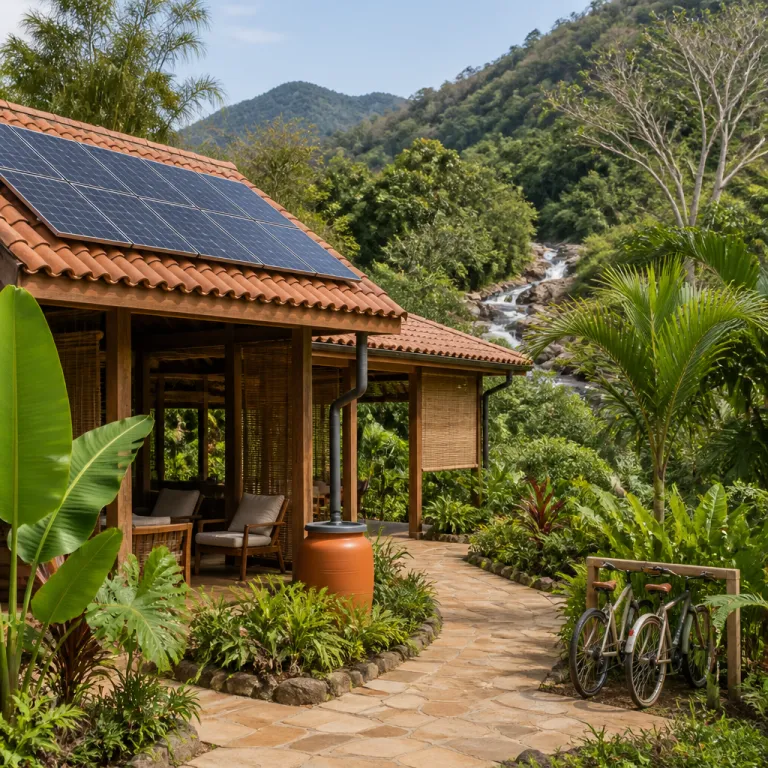
Some of Costa Rica’s most compelling hotels are not just riding the national renewable wave; they are experimenting with off-grid systems that push sustainable tourism into new territory. Pacuare Lodge is a benchmark here, operating entirely off-grid with a micro-hydro power plant that harnesses river flow to run guest suites, the spa and the restaurant kitchen without diesel generators humming in the background. The lodge’s own sustainability documentation explains how the turbine and battery bank are sized to cover core operations while encouraging thoughtful energy use in guest rooms. When you sit down to a candlelit dinner at Pacuare, the fact that your lighting and refrigeration are powered by the same river you rafted earlier in the day turns sustainability from a policy into a sensory experience.
Even properties connected to the national grid are rethinking operations in ways that matter to a discerning guest. A resort spa near Arenal Volcano might use geothermal-influenced hot springs for bathing while relying on ICE’s renewable electricity for pumps and filtration, then layer in rainwater capture, greywater reuse and native landscaping to reduce irrigation needs, which collectively lowers both costs and environmental impact. In San José, an urban hotel property can leverage the stable grid to run efficient air conditioning and elevators, then focus its innovation on waste reduction, food sourcing and staff training, proving that sustainability is not limited to remote eco-lodges in the cloud forest but can be embedded in city hotels that serve business travelers and conference groups.
The unresolved piece is transport, because while Costa Rica’s electricity is clean, most tourism transfers still run on fossil fuels. The dataset is explicit here: “What impact does Costa Rica’s energy policy have on tourism?” “It attracts eco-conscious travelers and promotes sustainable tourism.” Yet the vans that take you from San José to Manuel Antonio or the domestic flights that hop to the Osa Peninsula still burn fuel, so leading hotels are starting to offer shared transfers, invest in electric vehicles and partner with certified operators to shrink that last-mile footprint. When you evaluate sustainability claims, ask how the property handles guest transport, because a truly eco-friendly strategy will address emissions from airport pickup to check-out, not just what happens on site, and the best hotels now publish approximate per-guest transport emissions alongside their broader carbon accounting.
How to choose your next stay: a practical framework for luxury travelers
When you narrow your shortlist of hotels in Costa Rica, start by mapping where you want to be on the spectrum from urban energy in San José to deep immersion on the Osa Peninsula or near Manuel Antonio. A cloud forest lodge such as El Silencio Lodge offers cool air, misty mornings and a strong focus on reforestation, while a coastal resort spa near Manuel Antonio or Arenal’s hot springs delivers more traditional amenities with views of the Pacific or Arenal Volcano, and both can meet high standards of sustainability if you read their certifications carefully. Align your choice with how you like to spend your time, whether that means early bird walks with a naturalist, long spa sessions or extended farm table dinners built around locally sourced Costa Rican produce.
Next, interrogate the sustainability credentials rather than stopping at the logo. Look for CST Level 4 or 5, then read how the hotel describes its energy sources, water systems, waste management and community partnerships, because vague language about being eco-friendly without specifics is a red flag. Properties like Finca Rosa Blanca, Pacuare Lodge and Lapa Rios are transparent about initiatives such as micro-hydro power, revenue sharing for education and support for nearby farms, and that level of detail should be your benchmark when comparing other hotels, resorts and eco-lodges across the country. Where possible, scan for references to ICE data, ICT guidelines or independent audits, which indicate that the property’s claims are grounded in verifiable standards rather than marketing copy.
Finally, consider how national context shapes your personal impact as a guest. Costa Rica’s choice to abolish its military and invest in renewable energy means that every night you spend in a hotel already carries a lower carbon footprint than a comparable stay in many other destinations, but your decisions still matter. By choosing eco-hotels that go beyond compliance, supporting restaurants that highlight locally sourced ingredients and asking informed questions about transport and community impact, you turn a business leisure trip into a quiet vote for a model of sustainable tourism that treats peace, biodiversity and guest comfort as parts of the same equation, reinforcing the policy choices and conservation strategies described earlier in this guide.
FAQ
How does Costa Rica’s 98.6% renewable electricity affect my hotel stay?
The high share of renewable electricity means most hotels in Costa Rica run on clean energy rather than fossil fuels, which reduces the carbon footprint of your air conditioning, lighting and hot water. Properties connected to the national grid benefit from hydropower, geothermal, wind, biomass and solar sources managed by ICE, whose 2025 figures report 98.6% renewable generation, as noted in its “Informe de Labores 2025.” For you as a guest, this usually translates into stable power, quieter operations with fewer generators and a more credible foundation for any sustainability certification the property holds, reinforcing the national-policy context outlined in the first section.
What is the CST certification and how should I use it when booking?
The Certification for Sustainable Tourism (CST) is Costa Rica’s official program that rates hotels and tourism businesses from Level 1 to Level 5 based on environmental, social and economic criteria defined by ICT. You should treat CST as a first filter, prioritizing Level 4 and Level 5 properties, then read how each hotel explains its practices in energy, water, waste and community engagement, as discussed in the section on reading CST ratings like an insider. The gap between Level 3 and Level 5 is where meaningful operational decisions happen, so use the rating to distinguish between basic compliance and deep, integrated sustainability.
Are eco lodges in places like the Osa Peninsula and Arenal less comfortable than traditional resorts?
High-end eco-lodges in regions such as the Osa Peninsula, Arenal and the cloud forest have evolved well beyond rustic cabins, often matching or exceeding traditional resorts in comfort while offering a stronger sense of place. Properties like Pacuare Lodge, Lapa Rios and El Silencio Lodge combine fine linens, attentive service and refined cuisine with renewable energy systems, low-impact architecture and immersive nature experiences. The main differences you will notice are design choices that prioritize natural ventilation, local materials and dark skies over excessive lighting, which many guests find enhances rather than reduces luxury, especially when paired with spa rituals and guided wildlife encounters.
How does Costa Rica’s lack of an army influence safety and tourism?
Costa Rica abolished its military to promote peace and redirect funds to education and healthcare, and national security is now handled through police forces, diplomacy and international alliances. This long-standing commitment to demilitarization has helped create a stable environment that supports investment in tourism infrastructure, conservation and community development, a dynamic you see reflected in the well-funded park systems and training programs for guides. For travelers, the presence you feel most strongly is that of park rangers, guides and hospitality staff rather than soldiers, which aligns naturally with the ethos of sustainable tourism described throughout this article.
What practical questions should I ask a hotel about sustainability before booking?
Before you confirm a reservation, ask how the hotel sources its electricity, manages water and waste, and engages with nearby communities, then request specific examples rather than general statements. Inquire whether the property holds CST certification, what level it has achieved and how often it is audited, and follow up by asking about transport options such as shared shuttles or electric vehicles to reduce last-mile emissions, echoing the operational concerns raised in the section on off-grid power and transport. Finally, explore how the restaurant and bar support locally sourced Costa Rican ingredients, because a serious commitment to farm table dining is often a reliable indicator of broader sustainability practices.