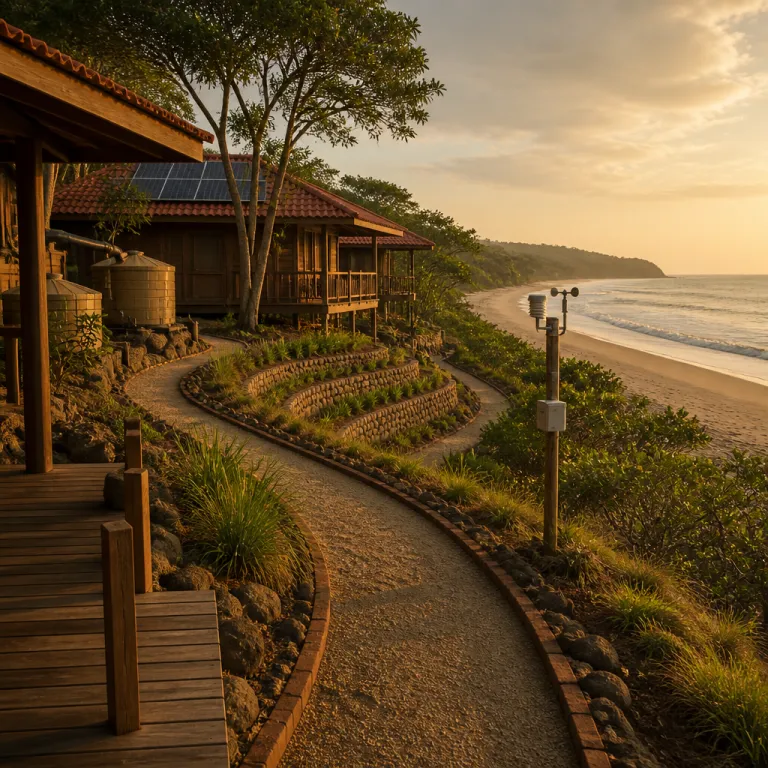
FU-TURISMO turns climate risk into a new luxury baseline
In San José, Costa Rica’s tourism authority quietly launched FU-TURISMO, a free costa rica hotel climate risk tool that is already reshaping how serious properties plan. The platform, led by the Instituto Costarricense de Turismo and the Superintendencia General de Seguros with German agency GIZ, gives hotels structured climate data instead of vague environmental promises, which matters when you are wiring a large private investment for peak season suites. For high end travelers, this shift means that climate resilience is becoming as critical as thread count, especially when choosing a costa rican rainforest hideaway or a Pacific resort in a region exposed to flood and drought.
The costa rica hotel climate risk tool is built around three modules that mirror how responsible business should think about climate change in the tourism sector. First comes education on environmental and climate disaster patterns in Costa Rica and Central America, then location specific risk modelling for droughts, floods and El Niño, and finally tailored action plans that translate key metrics into concrete steps for operations and insurance. This structure lets both national chains and independent luxury properties generate a report that satisfies public institutions, private sector investors and international norms on environmental social governance without turning sustainability into a marketing slogan.
For the state, FU-TURISMO is a way to protect a tourism sector that generated more than 5 500 million dollars in foreign exchange and over 500 000 jobs, many in local community economies. For the private side of tourism, the costa rica hotel climate risk tool is effectively free risk modelling and insurance development support, helping owners negotiate better coverage and align policies investment with real disaster risk rather than guesswork. When a hotel in Guanacaste or on the Osa Peninsula can show a FU-TURISMO report to insurers and investors, it signals operational discipline that most climate disaster exposed destinations in Central America and beyond still lack.
How climate-risk scores change the luxury booking decision
For a business leisure traveler extending meetings in San José into a long weekend on the coast, the costa rica hotel climate risk tool is an invisible filter that can quietly upgrade the stay. A property that has completed FU-TURISMO’s online self assessment, integrated its action plan templates and shared the resulting climate report with its insurance partners is far more likely to keep pools open, trails safe and air conditioning running during extreme weather. That level of preparedness matters when you are booking green season travel and expecting seamless service rather than last minute cancellations caused by unplanned environmental shocks.
Hotels using the costa rica hotel climate risk tool are forced to quantify how climate change could affect water availability, access roads and even the cultural and natural assets that underpin authentic experiences. They work with local community leaders, public institutions and the private sector to protect nearby rivers, forests and beaches, because those ecosystems are now clearly linked to risk scores and insurance premiums. This alignment of environmental sustainability, community engagement and insurance development turns abstract sustainable tourism language into measurable key metrics that can be audited by both investors and guests.
For travelers comparing properties on mycostaricastay.com, climate readiness now sits alongside spa menus and suite categories, especially when evaluating whether to book excursions in advance from luxury and premium hotels. A costa rican resort that can explain how FU-TURISMO informs its disaster risk protocols, evacuation routes and back up power plans is demonstrating a level of responsible business that many global competitors in Central America and the Caribbean still treat as optional. When you see that level of transparency, you know the hotel’s environmental and social policies investment is not just a line in a brochure but a framework that will protect your stay if the weather turns.
At the national level, Costa Rica’s choice to back a public costa rica hotel climate risk tool reflects the same state priorities that delivered near 100 percent renewable electricity and abolished the army, decisions that now shape the resilience of every hotel on your shortlist. Understanding how these national policies influence hotel infrastructure and risk management is essential, and detailed analysis of Costa Rica’s renewable grid and security context shows why the country’s public institutions punch above their weight in tourism governance. For luxury guests, that means a more stable backdrop for high value stays, from San José business hotels to remote Pacific retreats.
From platform to place: what FU-TURISMO means on the ground
On the Pacific coast near Uvita, where rainforest slopes meet the Marino Ballena shoreline, the costa rica hotel climate risk tool is already influencing how premium properties design their next phase of investment. Owners are using FU-TURISMO’s data to decide where to place new villas, how high to elevate pathways and which slopes need reinforcement to reduce landslide disaster risk during intense rain. For guests choosing among Uvita Costa Rica hotels with premium stays and unique amenities, a property that can show this level of planning is more likely to deliver uninterrupted authentic experiences even when storms roll in from the Pacific.
Across Costa Rica, from the Nicoya Peninsula to the Caribbean coast, FU-TURISMO is expected to support more than 3 000 tourism businesses, many of them microenterprises that anchor local community employment. Because 65 percent of tourism enterprises are small and 60 percent of the workforce is women, a robust costa rica hotel climate risk tool becomes a social stability instrument as much as an environmental one. When private investors see that both public and private institutions are aligned around climate risk modelling and insurance development, they are more willing to commit large scale capital to high end projects that meet international norms for environmental social governance.
For travelers, the practical question is simple ; which hotels are already using FU-TURISMO and how does that shape your stay in Costa Rica. When a costa rican property can explain that “What is FU-TURISMO?” “Who can use FU-TURISMO?” “How does FU-TURISMO help hotels?” it signals a management team fluent in both climate science and guest expectations. That is the kind of operational fluency you want when booking a rainforest retreat, a San José design forward address or a coastal hideaway featured on mycostaricastay.com as a premium stay with exceptional amenities and unique experiences.
Compared with other luxury destinations in Central America, Costa Rica’s integration of a national costa rica hotel climate risk tool into tourism policy gives it a clear edge in long term sustainability. The state has effectively turned climate and insurance data into shared infrastructure, allowing both public and private actors in the tourism sector to align around responsible business practices that protect cultural landscapes and natural assets. For high end guests, that means every night booked in Costa Rica is now backed by a deeper layer of climate intelligence, even if you never see the dashboard behind your ocean view suite.